
Keeping the structure of a top-quality beverage collection strong needs more than a basic cooling system. It calls for a smart thermal shield that mixes clear viewing with strict environmental management. For makers and business operations, picking the right glass is the key element in this setup. Low-E (Low Emissivity) glass stands out as the go-to choice in the field for strong refrigeration. It gives a tech-based fix to issues like heat movement, ultraviolet damage, and power use.
The Engineering of Low Emissivity Technology
Low-E glass features a very thin, see-through metal layer—usually made with silver or tin oxide sheets—placed on the glass side. This layer works to bounce back long-wave infrared heat, yet it lets short-wave visible light go through. When used in wine and beer fridges, it keeps outside room heat away from the device. At the same time, the cool air made inside stays trapped within the space.
Rider Climax uses top-notch vacuum sputtering tools to make these layers even and tough. They add these special panels into double or triple-insulated setups filled with argon gas. As a result, the heat block gets much better. This setup matters a lot for upright freezer glass doors and fancy beverage coolers. There, the inside temperature must stay steady within just a small degree range. This helps guard the detailed chemical makeup of the items stored.
Critical Advantages for Beverage Storage
Putting Low-E glass into business refrigeration brings several real perks. These directly help the lasting quality of the goods kept inside.
- UV Radiation Mitigation: Ultraviolet rays often start “lightstrike” in wines and “skunking” in beers. In these cases, chemical parts break down into bad smells and tastes. Low-E layers block a large share of these harmful UV rays. They work as a lasting guard for items that react to light.
- Enhanced Thermal Stability: Changes in temperature can make wine corks swell and shrink. This might lead to oxidation over time. Low-E glass cuts down the effect of outside heat jumps. Thus, the cooling unit runs with a steady workload.
- Condensation Management: In places with lots of moisture, water buildup on the fridge door outside can hide the products. It may also cause upkeep problems from dampness. The heat traits of Low-E glass hold the outer sheet near room temperature. When matched with extra heating parts if needed, it almost fully stops fogging.
Innovations in Commercial Display and Energy Efficiency
Today’s business spots, like grocery stores and pro wine storage areas, need stand up freezer glass doors that are both sturdy and good-looking. The Rider Climax line meets these wants by pairing Low-E tech with solid frame builds. For example, fiberglass composite door frames can cut energy use by more than 25% for the unit, compared to regular aluminum ones.
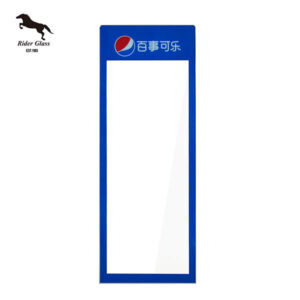
In special shop uses, adding LED lights inside the insulated glass turns the door into an active promo spot. It does this without hurting the heat traits. They achieve it through two-layer insulated tempered glass. This keeps a strong light passage for seeing while offering a base for brand show.
Durability and Maintenance Standards
Business glass doors face heavy daily action, with hundreds of thousands of open-and-close uses. Rider Climax items go through tests for over 300,000 cycles. This checks their long-run mechanical strength. Still, the glass life also relies on good upkeep.
When thinking about how to clean freezer glass doors, skip rough tools that might harm the Low-E layer. This is key if it has a “hard coat” or an extra anti-fog cover. Pick a soft, lint-free cloth with a gentle, ammonia-free cleaner for glass. This keeps things clear without marks on the face. Also, clean the magnetic seals often. Make sure the auto-close works without blocks. These steps keep the door’s energy-saving fit tight.
Global Compliance and Customization
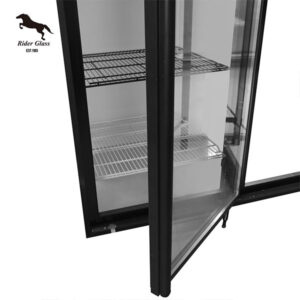
As a full-service provider for building and factory glass needs, Rider Climax makes sure all deep-worked items meet tough world rules. This covers approvals like AS/NZS 2208:1996, CE, SGCC, and SAI. They are required for sales in the Americas, Europe, and Oceania.
More than basic sizes, custom options let glass doors fit exact brand styles and building needs. This includes:
Silk-screen printing and digital print glass for lasting logos.
Irregular shaped glass and varying thicknesses of tempered panes (from 2.8mm upwards) to match special cabinet styles.
Specialized heating functions, including frame heating or glass heating, to handle different weather in cold rooms or vending machines.
Часто задаваемые вопросы
What is the difference between double and triple insulated glass for freezers?
Double-layered glass suits coolers most often. Triple-layered glass is the norm. It gives the added warmth block for below-zero cold. Both kinds usually have argon gas inside to lower heat flow even more.
Can Low-E glass be used in curved door designs?
Yes, Rider Climax provides curved tempered glass with a radius from 800mm to 5000mm. It can go into insulated units for a fresh look.
Does the anti-fog function require constant electricity?
While the Low-E coating itself is passive, high-performance anti-fogging in extreme humidity often utilizes an electric heating element within the glass or frame, which operates via an external capacitor or transformer.
What materials are used for the door frames to ensure food safety?
For chest freezers and reach-in units, food-grade PVC or high-strength aluminum alloy is used to ensure the materials are non-toxic, odorless, and corrosion-resistant.
Call to Action: Partner with Rider Climax
For makers and sellers of business cooling gear looking for a steady production ally, Rider Climax brings over 30 years of factory know-how. Our site covers more than 10,000 square meters. The group offers full ODM/OEM help, from exact CNC cuts to advanced hollow shapes and silk-screen prints. We stick to tight timelines and top world quality to back your worldwide supply needs. Reach out to our tech sales crew now. Talk about your exact wants for strong glass door fixes.